
The other day a friend asked me, “I have often heard about India being a third-world country. What exactly is the third world?” It struck me that most of us are ignorant about what that exactly means. I said to my friend that “third world” was an euphemism for “desperately poor extremely underdeveloped starving nations utterly misgoverned by unimaginably corrupt kleptocrats.”[1] And, I added, as a consequence, the third world is a world of human-created misery.

 The images of the desperately poor are heart-breaking. Imagine how hard it must be to be one of the billion extremely impoverished people. They are skin and bones, suffering from chronic hunger, malnutrition, stunted physically and mentally retarded.
A billion or so. We cannot imagine such large numbers. Then there are the leaders of these billions. They stash away in off-shore banks billions that they steal from their countries. These guys are well-fed, enjoy extreme protection from terrorists — often they are the guys who hob-nob with the terrorists, anyway.
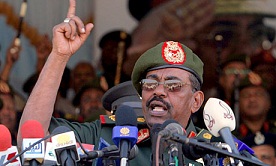
Omar al-Bashir, the Sudanese president, has siphoned as much as $9bn out of his impoverished country, and much of it may be stashed in London banks, according to secret US diplomatic cables that recount conversations with the chief prosecutor of the international criminal court.
Some of the funds may be held by the part-nationalised Lloyds Banking Group, according to prosecutor, Luis Moreno-Ocampo, who told US officials it was time to go public with the scale of Bashir’s theft in order to turn Sudanese public opinion against him.
“Ocampo suggested if Bashir’s stash of money were disclosed (he put the figure at $9bn), it would change Sudanese public opinion from him being a ‘crusader’ to that of a thief,”
Note that the leaders of the advanced industrialized economies, aka developed countries, know about the kleptrocracy that keeps the third world in miserable hunger. But it is not in their interests to reveal this to the people. Wikileaks, as Ocampo notes, changes public opinion. It educates the people.
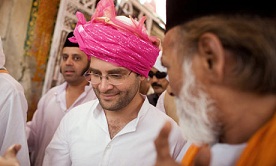
Note that the people are starving but the leaders are plump and comfortable. The people’s desperate struggle to keep body and soul together is in contrast with their leaders’ billions in Swiss banks. Sudan is a small country (45 million population) relative to India. Still Mr al-Bashir’s $9 billion is peanuts compared to what Indian political and business leaders have accumulated: a staggering one thousand five hundred billion ($1,500,000,000,000) abroad.
Having so much money, these leaders can then talk to the leaders of the advanced industrialized countries as peers. They are in it together. The 3rd world leaders are members of the club. They confide in each other and exchange words that they would not want the rest of us to hear.
“You know, the problem with the unwashed masses is that they are too uppity,” one may say to the other at a nice little cosy lunch at one of their fancy mansions in the capital of some third world country. “They are the cause of terrorism, don’t you know.”
The people, of course, don’t know what their leaders really think about them. They are fed the usual crap by the newspapers and TV — which incidentally are packed with puppets of the regime.
Here’s how Elliot Abrams in a “Council on Foreign Relations” op-ed, Dictators, Democracies, and WikiLeaks (Dec 1, 2010), puts it
The second and most important reason foreign leaders ask for secrecy is that they are protecting themselves from their own populations. Dictators and authoritarians don’t tell their people the truths they tell us; their public speeches are meant to manipulate, not to inform. Instead of educating their citizens, as one might have to do in a democracy, they posture and preen on state-owned television stations and in state-controlled newspapers. Their approach is striking: Tell the truth to foreigners but not to your own population.
Wikileaks allows us a peek into what’s really going on behind the scene. It tells us that one “Prince Charming” believes that Pakistani-funded Islamic terrorism is not really as much as a threat to India as a bunch of Hindu radicals.
Some of us have always suspected that the US (and previously the USSR) has the leaders of third world countries on their payroll. Wikileaks provides evidence.
One thing we need to remember. The US is the most powerful nation on the planet. It did not get there by not fixing the rest of the world to suit its purpose. It had to — and has to — control the third world. It cannot post US soldiers in every nook and cranny of the world. The simplest way to get around that is to buy up the third world leaders. India is not an exception to that strategy.
That brings me to another related point. The US wants “buyable” third world leaders. The US will be very unhappy if India gets a prime minister who cannot be bought. So it will do its best to support someone pliable (say, for example, a half-breed whose loyalties are divided between two cultures and countries) and do its best to prevent an Indian nationalist to get to New Delhi.
Wikileaks will tell us if this theory of mine is correct.
There’s no need to belabor the point: wikileaks tells us what we need to know. It is one of the best instruments of public education. We — the citizens of India — have the responsibility to throw out the kleptocrats who have ruled India for so many decades. It is up to us to free India from the kakistocracy that the Congress has made it into.[2]
If even after this, the public does not wise up and drag the kleptocrats to the gallows, then of course they deserve the hunger and deprivation they suffer.
It’s all karma, neh?
NOTES:
[1] My definition of the third world — “desperately poor extremely underdeveloped starving nations utterly misgoverned by unimaginably corrupt kleptocrats” — is only an operational definition. The etymological definition of course differs from it. The Wikipedia puts it nicely.
The term “Third World” arose during the Cold War to define countries that remained non-aligned or not moving at all with either capitalism and NATO (which along with its allies represented the First World) or communism and the Soviet Union (which along with its allies represented the Second World). This definition provided a way of broadly categorizing the nations of the Earth into three groups based on social, political, and economic divisions.
The term continues to be used colloquially to describe the poorest countries in the world.
[2] Kakistocracy – government by the most corrupt and the least principled. See this Feb 2008 post for more on that: Of Kakistocracies, Principals and Agents.

 Atanu Dey : Life is a Random Draw
If I’m not wrong, the term “Third World” was coined by Jawaharlal Nehru to distance India from the first and second world- US and communist- countries at that point of time. Unfortunately, the countries who called themselves “Third World” were underdeveloped and hence Third World became synonymous with under development,poverty,etc.
LikeLike
Nirjhar, actually you are mistaken. It was not Chacha that coined that phrase. The quote from Wiki in the post makes that point.
LikeLike
Thanks. Corrected my self. Damn nehruphant-writers!
LikeLike
Ron Paul defending Wikileaks.
http://musefree.wordpress.com/2010/12/18/ron-pauls-passionate-defence-of-wikileaks/
LikeLike
In The Land of Black Gold, the rebel Bab-El-Ehr has pitched camp in the desert with his followers, Tintin is being held hostage, and ruler Amir Ben Khalish Ezab’s planes are dropping leaflets on Bab-El-Ehr’s goons. Bab-El-Ehr chortles: “They are dropping leaflets, and none of my men can read.”
So tell me, of 1.1 billion Indians, how many know about Wikileaks, how many can afford the time to read and understand the commentary beyond a generic “all power corrupts”, and, in the end, how many can come up with meaningful and effective (by which I largely exclude blogging) reaction?
BTW, in the Tintin comic, right at that moment, a large stack of leaflets comes down on Bab-El-Ehr’s shoulder, and he finally gets the message, shouting obscenities back at the fleeing planes. With India, a steadily deteriorating HDI seems to have failed to have a similar effect.
LikeLike
Where does Rahul Gandhi get his bizarre ideas from? We can only speculate, since he doesn’t speak much to the press, and even when he does on the rare occasion, the worshipful journos kiss Mr G’s feet rather than ask him some searching questions.
Considering the fact that the average Hindu guy in Congress is addicted to the “minority” vote, it’s unlikely there are any Hindus left in that party who would displease the boss by being sympathetic to their faith. The “house nigger” is the norm — there’s really nothing that SoniaG ought to fear from him. Yet, despite this fact, there is not a single Hindu in the charmed circle of her advisers. Some names: Ahmed Patel, Ghulam Nabi Azad, Oscar Fernandes… Coincidence?
So, if RahulG’s handlers are not poisoning his mind, the other possibility then is that he is picking up his Hinduphobia from his faith, Catholic Christianity.
Either way then, the inescapable conclusion is that we have at the top of India’s power structure a bunch of people who are prejudiced against the country’s native (and major) religious tradition. It’s instructive to note that Radia Media types do not want to acknowledge this elephant in the room, wikileaks or no leaks.
LikeLike
http://www.veteranstoday.com/author/rajiva/
LikeLike
Usually, I would not have taken Oldtimer‘s kind of reasoning (laid out above) seriously, but I don’t know why, I am tempted to believe him this once. My disinclination to believe such assertions comes from my own belief that those *so much* at the top (in political hierarchy) are atheists & equally irreligious; they do not really believe religious mumbo-jumbo and so they do not really feel that they need to promote *their own* religion. All they are interested in is money (and ‘power’).
Then, one might ask, why do these people not then appease the Hindus to win elections?
I think appeasing Hindus as one intact constituency would be a very good electoral strategy, but the other competing strategy – appease Muslims; divide Hindus has been tried & tested. So, not many parties (with the exception of BJP & allies) are trying the first strategy. But for Hindu-appeasing strategy to succeed, it has to be ensured that no other entity’s strategy is able to divide Hindus successful, which of course will not happen, given India’s social structure (plus, I believe because of policies like that of caste-based reservations).
BJP knows that if it tries the “secular” approach, Congress has a traditional image-related advantage, whereas Congress knows that with “Hindu-appeasing” approach, BJP has the same advantage. And thus both are sticking to their guns. And as I explained above, because Hindu constituency is divided, for “Hindu appeasing” approach to succeed is very difficult, and hence it succeeds less frequently than “secular” approach does.
The only reasons I am enticed by Oldtimer‘s reasoning is my impression of his based on his past analyses, and also because otherwise it is difficult to account for Rahul Gandhi’s inane observation. Or is it a case that RG was trying to appease his listener who he knew happened to be ‘Pakistanophilic’ & ‘Indophobic’?
I request Oldtimer to respond if he reads my comment. Thanks!
LikeLike
http://www.indianexpress.com/story-print/726626/
Tavleen Singh at her best
LikeLike
wikileaks is good i agree wholeheartedly, the man should be awarded a nobel prize for international peace, the champions of individual’s freedom are the ones want him locked up forever. Also, see this video and please dont underestimate subramanya swamy, remember he is the one who lost sleep first over 2G spectrum before making all of us do so.
http://www.hindustantimes.com/audio-news-video/CBI-should-investigate-Rahul-Gandhi-for-ISI-links-Swamy/Article2-640860.aspx
LikeLike
The term “third world” originates from Graham Greene, the author who divided the world into 1st, 2nd and 3rd depending on their importance to the world order
LikeLike
Suhas,
That’s a good article by Tavleen Singh. First Pratap Bhanu Mehta and now Tavleen Singh. Indian Express seems to be a much better newspaper than the alternatives.
LikeLike
Agree with the article, but one important point is missing – wikileaks is only the messenger. It will only work, IF, there is someone that dedicated to risk his career, or worse life, and act as a whistle blower to govt. corruption. In case of US leaks, it will reform the system in the long term, although it will take some hit in the short term, largely due to the efforts of some ‘patriotic?’ Americans willing to risk everything and ‘steal’ these docs and send it over to wikileaks; herein lies the biggest achievement in this entire leaks episode.
The bigger question w.r.t. wikileaks being beneficial to India is, are there any patriotic Indians left that could do such a thing?
LikeLike
to a certain extent you can say this is good for third world but if you go through the information revealed by wikileakes you will realize that most of this stuff we know already( i am referring to the american policies)
what wikileakes dose it it gives this info a official sanction
question is what next?can we come with something revolutionary?
as far as India is concern i dont think so
our policies are still are dependent on USA( call it as FIRST WORLD!!)
so THIRD will always come after FIRST.
not desired but true
LikeLike