Subho Bijoya Dashami

Ma Durga and her children — Ganesh, Lakshmi, Saraswati and Kartik. Click to embiggen.

Pujo ended today. Ma Durga’s visit to her maternal home is over and she’s gone back to her husband’s home. Bengali traditional iconography shows her with her children. In the picture above, from left to right, there’s Ganesh, Lakshmi, Ma Durga riding a lion in her incarnation as Mahisasurmardini (the slayer of the demon Mahisasur), Saraswati and Kartik. (Image from the puja pandal at PJC Bangalore.)

Mahisasur is a powerful asura (demon) depicted as a half-buffalo, half-human being born from the union of an asura king and a she-buffalo named Mahishi. He is known for his shape-shifting abilities, capable of transforming between human and buffalo forms. He gained immense power through severe penance, which led to a boon from Bramha Dev granting him invulnerability to being killed by any man or god. This boon had a critical loophole: he could only be slain by a woman.  Continue reading “Subho Bijoya Dashami”

Shubho Bijoya

Ma Durga with (l to r) Ganesh, Lakshmi, Saraswati and Kartik.

Today was visarjan and Ma Durga has returned with her children to her husband’s home. After visarjan, people wish each other Shubho Bijoya. So Shubho Bijoya to all.

For Bengalis, and a few other Indian communities, Ma Durga’s annual visit to her maternal home is an occasion of great celebrations. She visits with her children: sons Ganesh and Karthik, and daughters Lakshmi and Saraswati. Continue reading “Shubho Bijoya”

Ganesh Chaturthi

It’s Ganesh Chaturthi season again. Therefore it is time for the annual post. Of the 330 million devas of the Hindu dharma, Ganesha is my favorite for a variety of reasons, chief among them being that my interests closely mirror his.

He likes food; he likes reading and writing; he loves music; likes traveling; he is lazy and is easily bribed, and so on. Ganesha is always depicted with food. After the sage Vyasa composed the Mahabharata, he dictated the massive 100,000 verses to Ganesha as the scribe. Continue reading “Ganesh Chaturthi”

Dhanteras

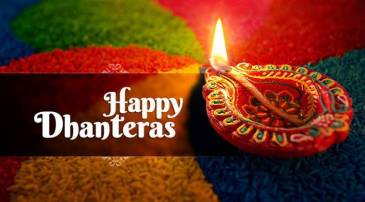
Happy Dhanteras. Economists are fundamentally concerned with human flourishing. Therefore it is appropriate that as an Indian-born economist, I focus on an Indian festival that celebrates wealth. Dhanteras.

Happy Dhanteras to all. May you and yours have Lakshmi Ma’s blessings. For what the Dhanteras festival is, see this and this.

Shubho Bijoya

Ma Durga. Click to embiggen.

Shubho Bijoya greetings to all. Today is what we Bengalis call Bijoy Doshumi, the final day of our most important festival, Durga Pujo or simply Pujo.

I’m in Bangalore as a guest at my friend K’s home. The above image is from a Durga puja we visited yesterday evening. It depicts Ma Durga and her four children — from left to right, her son Ganesha, her daughter Lakshmi, herself, her other daughter Saraswati, and her other son Kartik.

As a child I learned this story from my mother and grandmother. Every year Durga, who is married to Shiva, comes to visit her parental abode with her four children. Everyone celebrates her visit and she is worshiped, and on the final day of Bijoy Dashumi, she goes back. Continue reading “Shubho Bijoya”

Ganapati Vighan Haran

This is a tradition I stick to. I try to post on Ganesh Chaturthi every year, and today is no exception.

Born in Nagpur, Maharashtra, two Hindu festivals were paramount for me — Durga Puja is common to all Bengalis, and then there’s Ganesh Puja which is common to people in Maharashtra. That’s central to who I am.

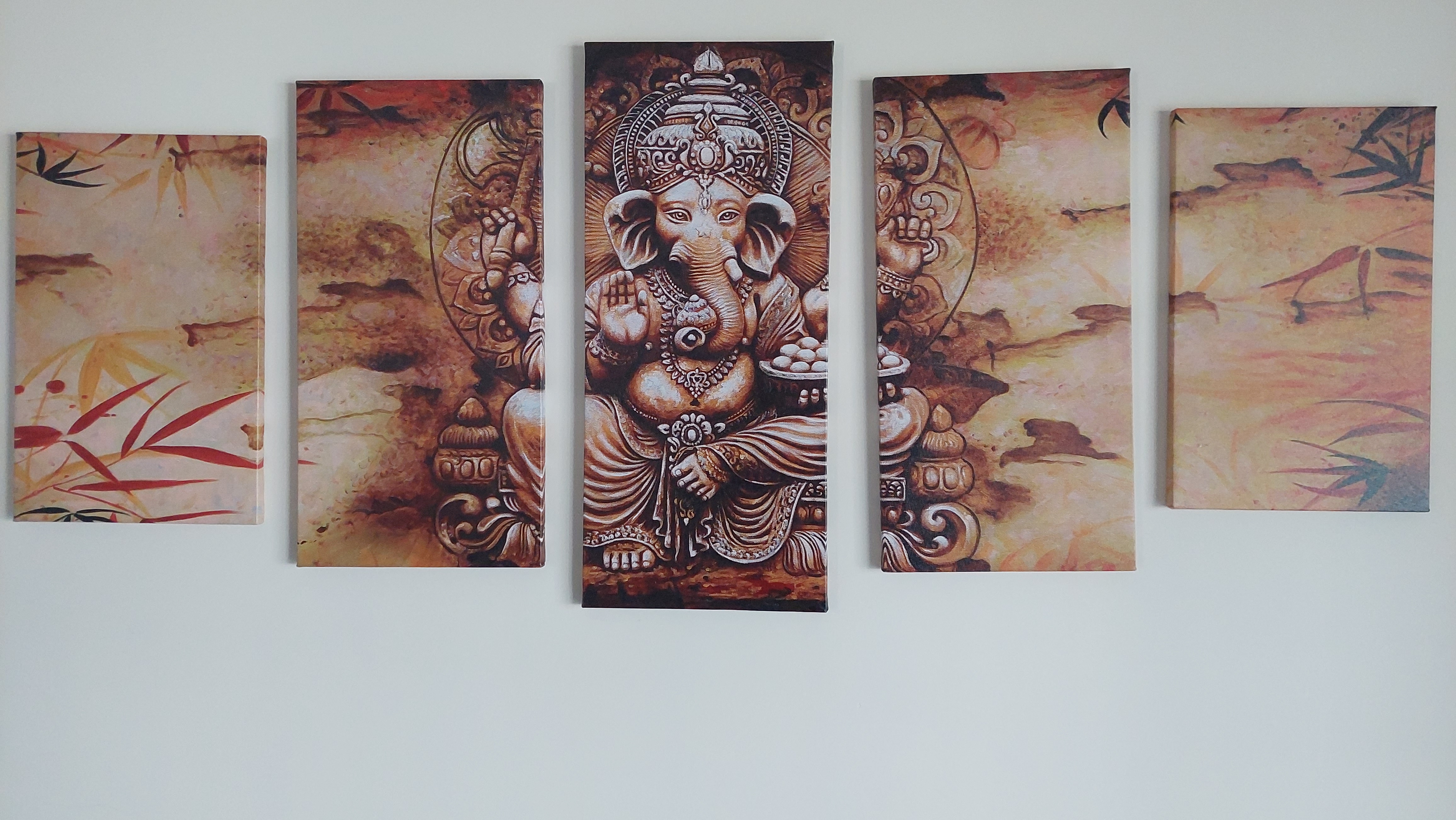
My home in the US is sparsely decorated but I have a wall-hanging in the kitchen. It was a house-warming gift from my friend Yoganand. That’s a picture of it at the top of this post. Continue reading “Ganapati Vighan Haran”

Guru Purnima

Full moon rising over the Griffith Observatory, Los Angeles. Aug 2021.

Guru Purnima is observed on the day of the full moon this month. The full moon today will be at 2:38 PM Eastern Daylight Time. Hindus, Jains, and Buddhists observe this day primarily to recognize the role of the guru in the process of enlightenment.

The Bhagavad Gita is a prime example of teaching. Arjuna is taught by Krishna on the battlefield of Kurukshetra. Here are a few verses from the Gita: Continue reading “Guru Purnima”

Dhanteras

Dhanteras Greetings. For those who are not familiar with this northern Indian festival, here’s a bit from a 2019 post on Dhanteras.

“The first day of Diwali is called Dhanteras — the thirteenth lunar day of the month of Kartik. On this day, Lord Dhanwantari came out of the ocean with amrut — the nectar of immortality — for the Devas. This day marks the beginning of Diwali celebrations.”

Share lots of sweets with family and friends, and have a wonderful Diwali with fireworks and lights.

Here’s what I am listening to — Roopa Panesar on the sitar, accompanied by Upneet Singh on tabla, and Pirashanna Thevarajah on the mridamgan. Listen. Continue reading “Dhanteras”

AMA – the Ganesh Chaturthi edition

Ganesh Chaturthi greetings. After many years, I find myself in Mumbai during Ganesh puja. It appears very subdued — understandably so.

In the normal course, I usually visit India twice a year. But this time I am back in India after a bit over two years. Nothing much appears to have changed in Mumbai — the streets are mostly dug up and under construction that proceeds at a glacial pace. Ganesh is the Remover of Obstacles. The BMC (the public works corporation of Mumbai) is the Anti-Ganesh: it is the Installer of Obstacles.

It’s been a while since I posted an Ask Me Anything. So ask away. And listen to Kishori-tai. Continue reading “AMA – the Ganesh Chaturthi edition”

Maha Shivratri


Trilochana by Kumaran on 500px.com
Tonight is Maha Shivratri. Shiva as “Nataraja” — the Lord of the Dance — dances the Tandava, the dance of creation and destruction. It is the most powerful metaphor of how the universe operates. Listen to this Shiv Tandava Stotram. Continue reading “Maha Shivratri”