Articles in the Economics Category
Economics »
Among economists who can explain economics to anyone even remotely interested in the subject, Prof Kaushik Basu is in a league of his own. Many years ago as a graduate student at Berkeley, I had had the privilege of hosting him for dinner together with Profs deJanvry and Sadoulet. I occasionally re-read his columns to learn how to write. Here I present an extended excerpt from a 1997 India Today column of his. {Click on image for source.}
Economics, People »
Excellent profile of Paul Krugman in the New Yorker by Larrisa MacFarquhar. It is long and interesting. A few excerpts below the fold. This is a must read if you have even a passing interest in economics. Economics is about people and it is done by people. Among contemporary economists, Krugman is as good as they come.
Cities and Urbanization, Economics, Rural Development »
Navi Radjou’s blog post titled, “India’s Rural Innovations: Can They Scale?” in harvardbusiness.org concludes with:
I strongly believe that the only way India can sustain its long-term economic growth is by unleashing and harnessing the creativity of its grassroots entrepreneurs, especially in rural areas. But here is the challenge: these grassroots inventions don’t scale up. Indeed, most rural innovation initiatives such as DesiCrew and grassroots inventions like Mitti Cool, however impressive they may be, are sadly limited in their impact to a local or regional market of a few hundred …
DesiPundit, Economics, Essentially Stupid, Information and Communications Technology »
The radical ignorance displayed by those who claimed that the government had created a laptop costing Rs 500 (~US $10) is jaw-dropping spectacular. How on earth can one for even one moment entertain the idea that any entity — least of all the government and a bunch of students — could produce something for an order of magnitude less cost than currently possible is unfathomable.
As the photoshopped image in my first post on this matter previously states, “I see stupid people . . . they don’t even know that …
Economics »
The book, The Gridlock Economy, gets added to the growing pile of stuff to read.
Every so often an idea comes along that transforms our understanding of how the world works. Michael Heller has discovered a market dynamic that no one knew existed. Usually, private ownership creates wealth, but too much ownership has the opposite effect—it creates gridlock. When too many people own pieces of one thing, whether a physical or intellectual resource, cooperation breaks down, wealth disappears, and everybody loses. Heller’s paradox is at the center of The Gridlock …
Information and Communications Technology, Transaction Costs »
Upstream and Downstream Choices
It is fairly well understood that information and communications technologies (ICT) tools expand choice. We all have access to a very large set of information and have the freedom to choose what we want to read, watch, listen to, etc., etc. ICT expands our “downstream” choice. What is not as well understood is that it expands our “upstream” choice also. It is a two-way medium, unlike say broadcast and print media which only allows us downstream choice: using ICT we send back information indicating our choice and …
Economics, Incentives Matter »
Capturing Externalities
It’s an economics truism that generally people respond to incentives. If you truly and deeply understand that, you know a fundamental truth about the world.
Economics, Monotheism »
The Dance of Creative Destruction
At the shining bright core of our galaxy of ideas lie a bunch of super-massive ideas that are tightly bound to each other. The core’s gravitational attraction holds the galaxy together, draws in stuff and transmutes them into higher elements.
Exploring the metaphor a bit further is interesting. At the center of galaxies dwell huge black holes which destroy both matter and time. And like the great god Shiva — the Mahadeva as Nataraja, the king of dancers, dancing the Tandava, the cosmic dance of creative …
Economics, Ruled by Monkeys, Transportation »
This story comes from the other end of the world but has lessons for any part of the world. It is “a parable about the combustible combination of optimism and ignorance.” Go read “Planning Order, Causing Chaos: Transantiago” by Michael Munger in the Library of Economics and Liberty.
Below the fold I have quoted the last part of the essay. If you wish to skip the article, do read the last bit.
Economics, What Reform is Needed »
A few days ago the Supreme Court of India admitted a petition challenging the subsidy for haj. (Link). The Rs 280 crore (~ US$ 60 million) a year subsidy for Muslims to visit Saudi Arabia, the petitioners claim, is not just unconstitutional but discriminatory.
Economic Reforms, Education, Incentives Matter, India's growth, What Reform is Needed »
Markets Work, Incentives Matter
The two broadest generalizations one arrives at from a study of economics are that markets work and that incentives matter. People respond to incentives because that is at the core of what it means to be rational. To the extent that humans are rational, their behavior is predictably in the direction that existing incentives point to. Trade between humans is rational because both parties in any voluntary trade benefit. The abstract mechanism which enables trade is called the market. Markets work in the sense that they maximize …
Economics, Essentially Stupid, Information and Communications Technology »
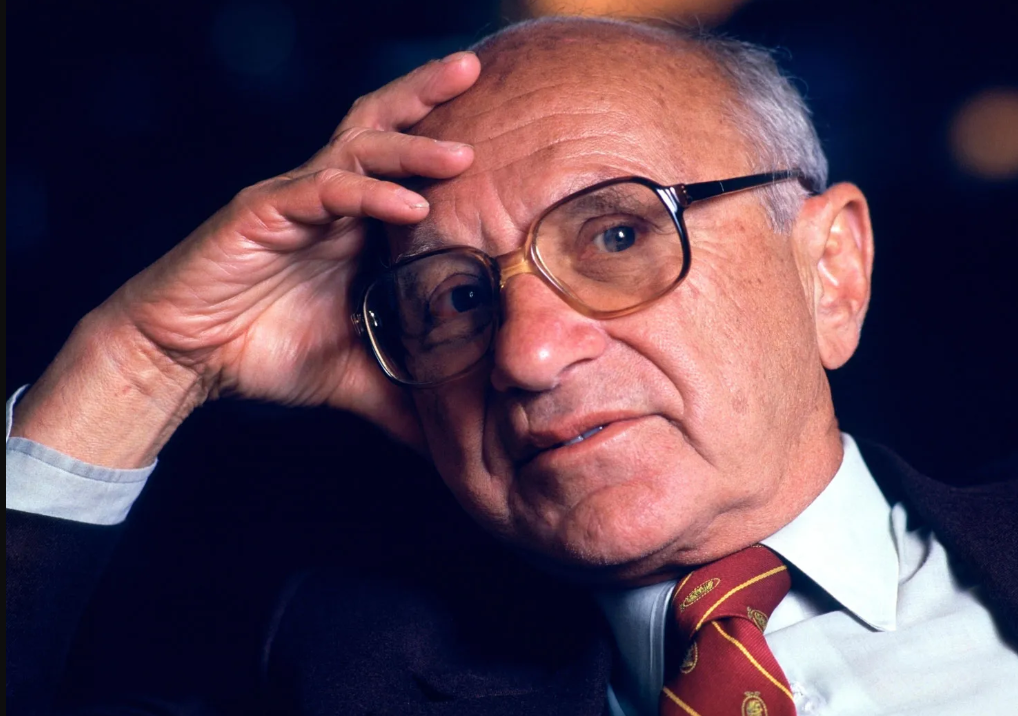
“Everything reminds Milton of the money supply. Well, everything reminds me of sex, but I keep it out of the paper,” wrote Nobel prize-winning economist Robert Solow in 1966 about Milton Friedman, another Nobel laureate economist, the father of monetarism.
Everything reminds me of India’s failed education system — and by extension — the stupidity of the government policymakers, bureaucrats and politicians included. Unlike Bob Solow, however, I cannot keep it out of my posts.
Economics »
“When you start getting wealth, you start demanding better nutrition and better food, and so demand is high, and that causes the price to go up.” That’s what George W Bush said in a press conference on May 2nd. The NY Times reports:
In response to the president’s remarks, a ranking official in the commerce ministry, Jairam Ramesh, told the Press Trust of India, “George Bush has never been known for his knowledge of economics,” and the remarks proved again how “comprehensively wrong” he is.
Information and Communications Technology, Mobile Phones, Opportunity Cost, Poverty, Transaction Costs »
A magazine article in the New York Times of April 13th has the rather mistaken and misleading title “Can the Cell Phone End Global Poverty?” (Hat tip: Abhishek Sarda). The article title is misleading because it doesn’t even remotely attempt to answer that question. It is instead about what is called a “human-behavior researcher” or “user anthropologist,” in this case someone who works for Nokia and essentially tries to figure out how people actually use their phones and thus how phone companies should design phones for greater usability.
Development, Economics »
The other I sat down to have a conversation with the spirit of Dr Adam Smith (1723-1790), professor of moral philosophy at the University of Glasgow and Fellow of the Royal Society of London and Edinburgh. A stellar observer of the human condition, his book, “An Inquiry into the Nature and Causes of the Wealth of Nations,” was published in the same year, 1776, as the Declaration of Independence of the United States. Opinion is divided on which of the two events is of greater importance for the subsequent evolution …
Economics »
This is a personal post. Not exactly what I had for breakfast type of post but close.
I clearly remember the moment when a light went off in my head. Brian Wright was teaching and we were talking about EV and CV. Equivalent variation and compensating variation, and the related concepts of “willingness to pay” and “willingness to accept.” As I had come to economics rather late in life, I had had the opportunity to figure out some of the basic concepts in my head. But I did not have the …
Economics, Education »
This is a follow up to the post on Indian spending on education abroad.
The actual spending may not be $13 billion annually but the argument does not change even if the figure was much lower. What matters is that it is indicative of a problem and we should be concerned about it. It should be noted that this spending is an outflow of resources. That in itself is not a bad thing, however. We need to ask if this is a net outflow in the education sector. That is, …
Economics »
This is a follow up to the previous post on Knowing Basic Microeconomics where I had claimed that micro theory is essentially codified common sense and that it is never too late to learn a bit of microeconomics. Many people have written to me (and some commented on the post) that they would like references to some work that makes micro theory accessible to the lay person.
I am not familiar with what is available and therefore I am not qualified to answer that question. I have read a few …
Development, Economics »
Enclaves of Private Luxury
Just off the expressway from Mumbai, on the road leading into Pune, you see huge billboards advertising new housing developments with fancy names like “Whispering Pines” and “Orchard View” crowding each other, promising idyllic lifestyles of lavish comfort. They convey very urgently a palpable sense of how rapidly the market for private luxury dwelling is blossoming thanks to increased salaries and easy housing loans.
These billboards reflect the increased aspirations of the growing upper middle-class in India. Curiously, one set spoke to a deeper and disturbing reality. …
Economics »
Smart people think alike. Or at least they reach similar conclusions. Take Charlie Munger and me. We reached the same conclusion about the importance of microeconomics. Seriously though, I think it is a crying shame that people in general don’t have even a nodding acquaintance with the basic principles of microeconomic theory.