Negative Externalities

Oakbrook IL Jan 1 2025

A concept much beloved of economists is externalities. When an activity has an impact (negative or positive) on people who are not involved in it, that is known as an externality. Aabir is learning drumming. He practices for hours at home. The noise is a negative externality for the neighbors. Ayaan is an avid gardener. His front garden has awesome flowers. That is a positive externality for the neighborhood.

The concept of externalities was first systematically developed by British economist Arthur C. Pigou in his 1920 book “The Economics of Welfare.” Many economists, but not all, consider the presence of externalities to be a “market failure” and recommend government intervention to correct that failure. Is government intervention a good idea? Are there other ways of addressing the problem? Continue reading “Negative Externalities”

Public Choice Theory

During my formal training in economics, I mainly learned price theory (also known as microeconomics) and theories related to economic development.  Only after I was done with my Ph.D. did I learn about public choice theory and constitutional political economy. Those are my favorites. Let’s talk about public choice.

What is public choice? It is not “private choice.” When you choose something in your private capacity, that’s private choice. You are self-interested and choose to do the best you can for yourself and your loved ones. You try to get the most bang for your buck, so to speak. Your private choices affect you only and you reap the benefits or suffer the costs of your choices. It’s karma. Continue reading “Public Choice Theory”

Buffet on the Deficit

“There is no distinctly American criminal class – except Congress.” — Mark Twain

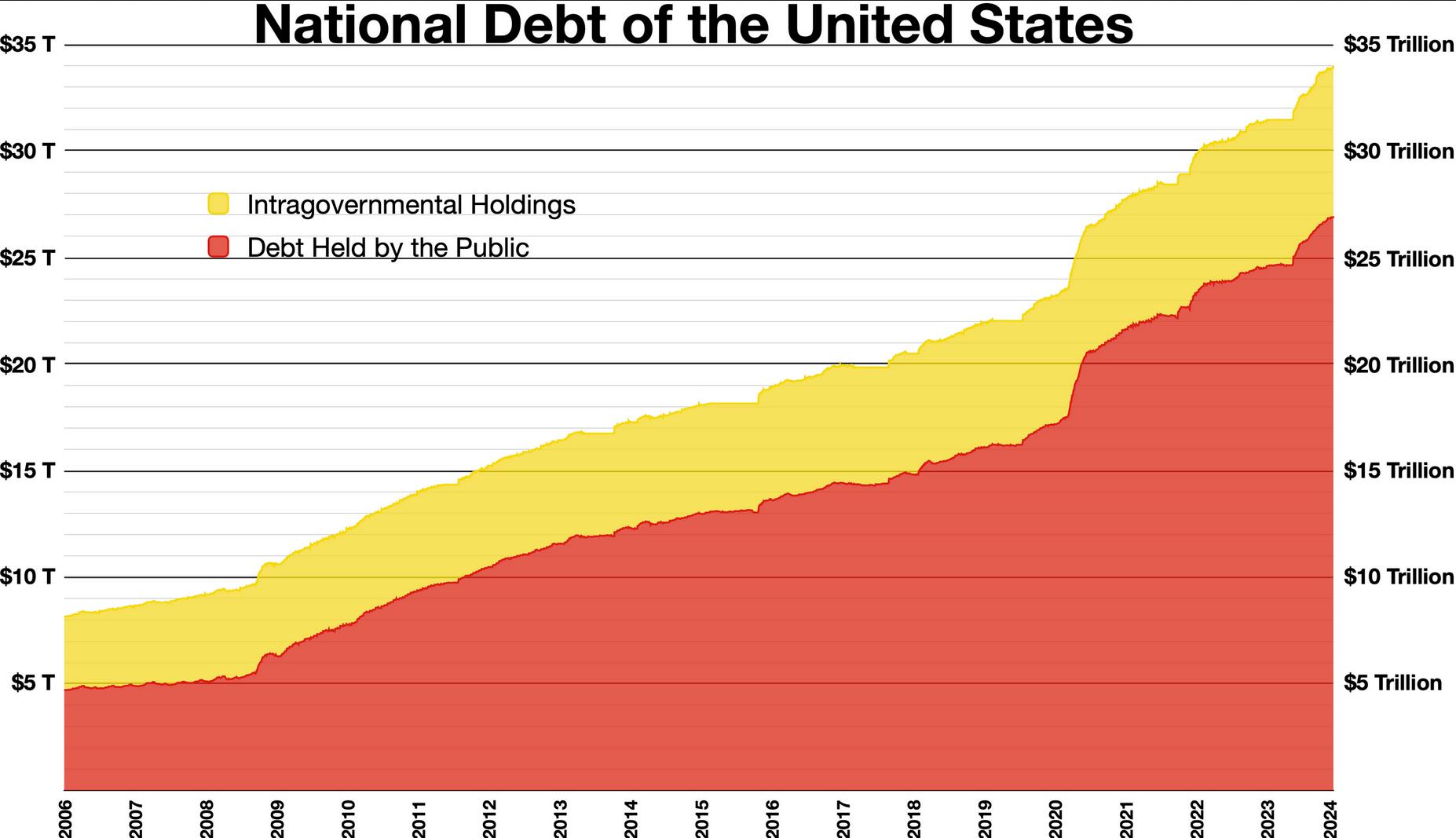
The US government runs up massive deficits. The US national debt is currently around $35 trillion (wiki.)

That number is too large for anyone to comprehend. Numbers in the hundreds — even in the thousands — make intuitive sense to us. But millions, billions and trillions are incomprehensibly large.

Here’s one way to see how our intuition is incapable of visualizing large numbers. A thousand seconds is a little less than 17 minutes. A million seconds is 12 days. That is easily understood. But then it gets harder to get a feel for the higher order numbers. Continue reading “Buffet on the Deficit”

“The Market is Ourselves”

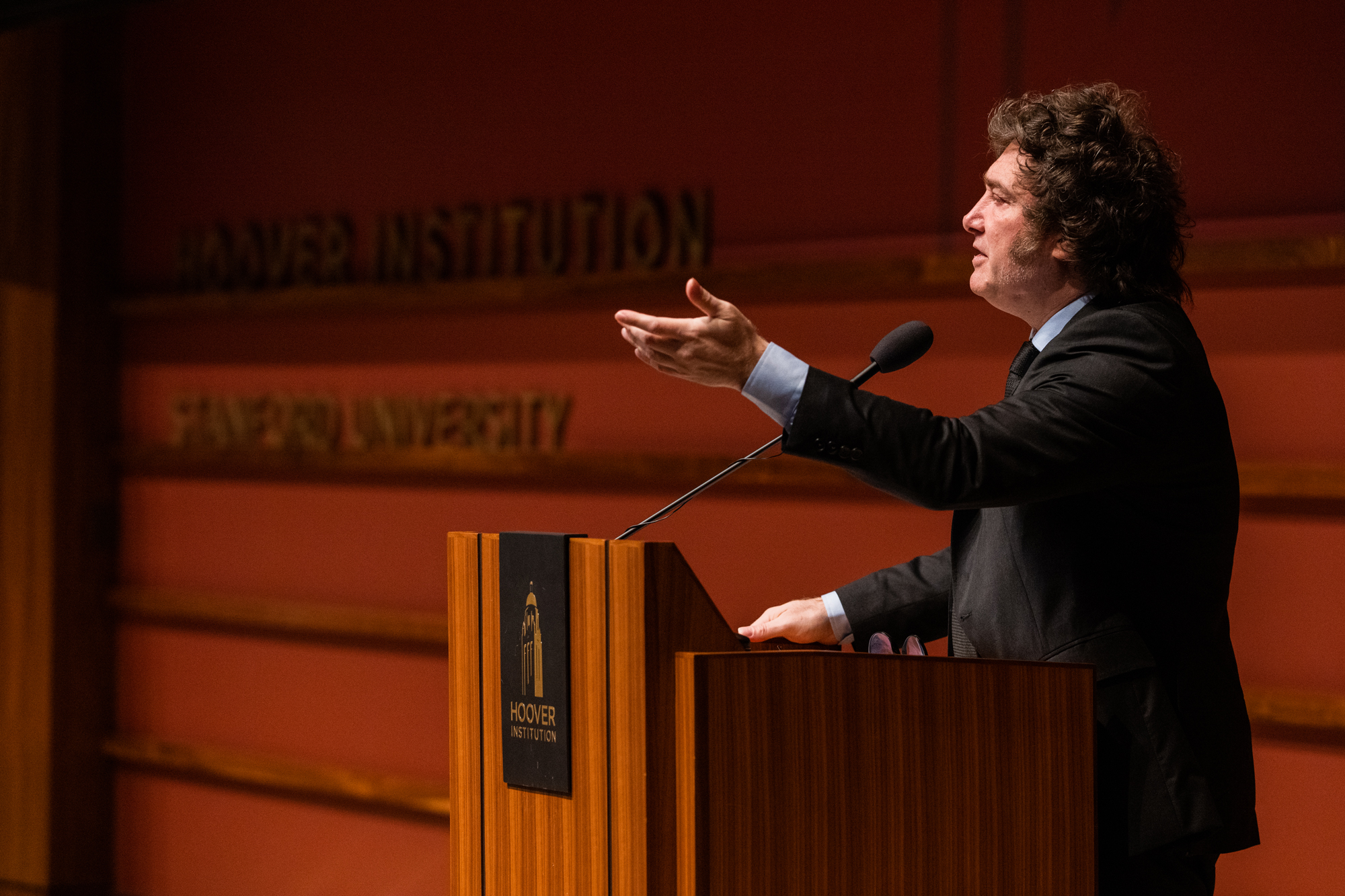
Javier Milei at the Hoover Institution

“All men dream, but not equally. Those who dream by night in the dusty recesses of their minds awake to find that it was vanity; but the dreamers of day are dangerous men. That they may act their dreams with open eyes to make it possible.”

I recalled that T. E. Lawrence (“Lawrence of Arabia”) quote on watching a recording of the talk Argentine President Javier Milei gave at the Hoover Institution in Stanford University on May 29th. He’s a dangerous man. He’s making his dream possible.

Argentina has been tremendously unlucky for over a century. It appears that its luck may be changing.

At the start of the 20th century, it was one of the wealthiest nations in the world, with a high standard of living comparable to many European countries. Then things went south. By 2001-2002, things had gone really bad. Continue reading ““The Market is Ourselves””

Marxism

Richard Wolff, professor emeritus, is a celebrated Marxist.[1] Being a Marxist is not a crime, although it ought to be considering the suffering, death and destruction that Marxism causes wherever and whenever it is tried.

Prof. Wolff is a fine example of an educated man who is totally lacking common sense and critical reasoning faculties. I am not generally so blunt but I think he’s an idiot too stupid to even realize the extent of his idiocy. It’s painful to think of the thousands of young minds he has ruined with his nonsense.

Where’s the supporting evidence, one may ask. OK. Try this. Continue reading “Marxism”

Prices

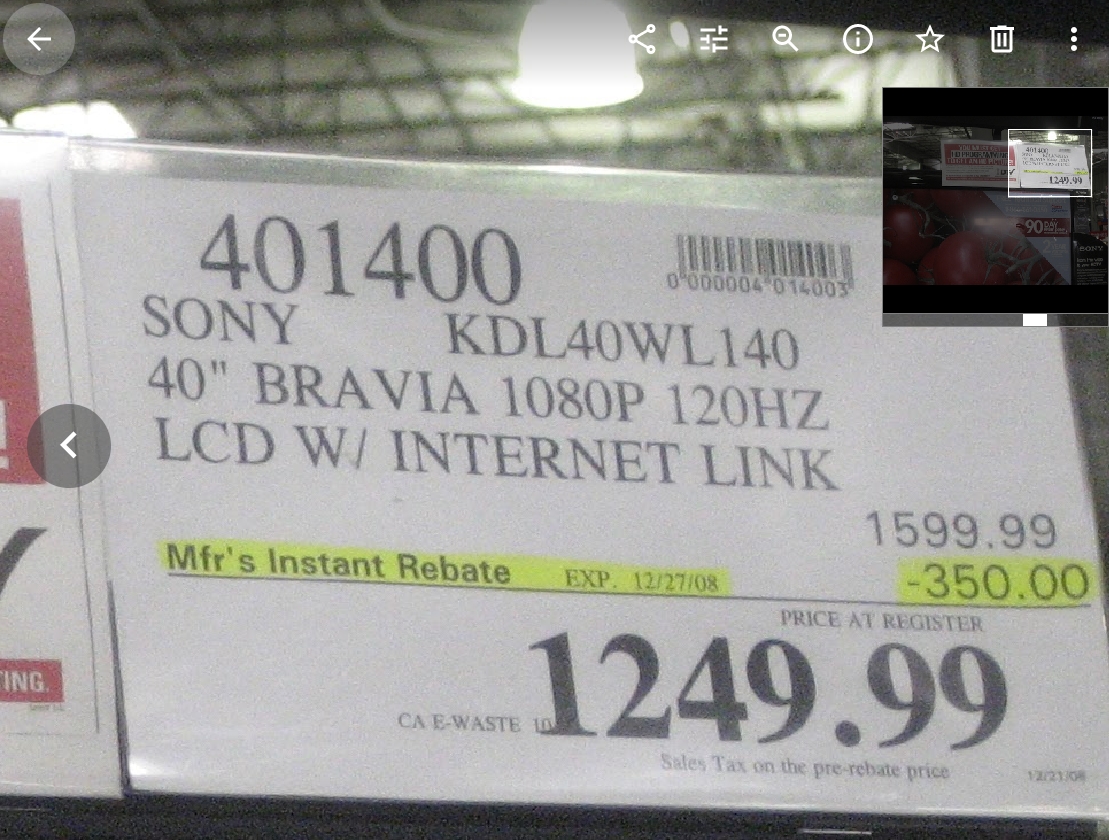
SONY 40″ Dec 2008. Click to embiggen

I recently came across a picture I’d taken years ago: price tag of a Sony 40″ 1080p LCD TV with “internet link” at Costco. The price of $1250 (after a $350 rebate) was valid till Dec 2008.

Fifteen years ago, people actually paid a princely sum for that tiny (by contemporary standards) TV. Back then, we would scan Fry’s Electronics superstore Sunday ads in the San Jose Mercury News for deals. Those were the days before Amazon. Fry’s is dead and gone now. But back in the day, Fry’s was the big deal in town. Best Buys ate their lunch. The king of kings from one time end up as ruins in the sands of time. But I digress.

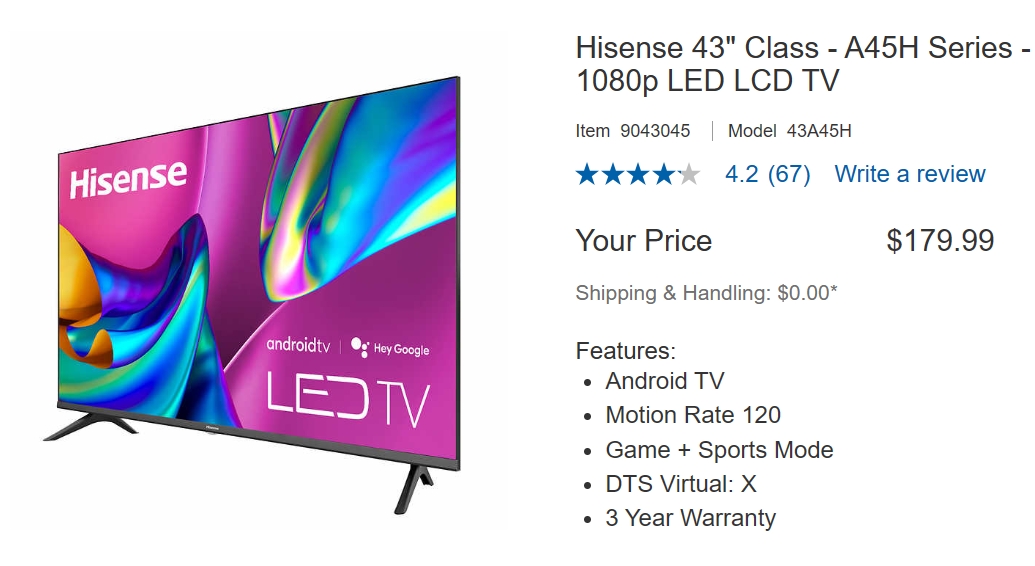
How much do we pay for TVs today? I checked the Costco.com website. Here are two screen captures. First, a Hisense 43″ LED TV. Price: $180.

Click to embiggen

Continue reading “Prices”

Economic Freedom of the World 2022

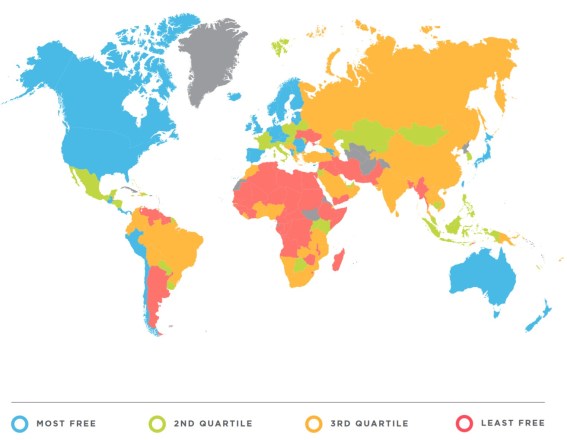
The Economic Freedom of the World Annual Report 2022, published by the Fraser Institute, is available for download (pdf) here. It reports on the economic freedom for the year 2020. The exec summary begins with: Continue reading “Economic Freedom of the World 2022”

Value, Price, and Cost

Often used interchangeably, the three concepts — cost, price, and value — are related but distinct. They are elementary and understanding them precisely is essential for reasoning about our world of production, exchange and consumption. People, including yours truly before learning economics, don’t even realize that they are confused about those simple concepts.

Let’s begin with value since it’s personal and therefore most intuitive. I want what I value, and vice versa. In nearly all cases, I have to give up something (S) in exchange for what I want (W). Logically, I must value S less than I value W if I do the exchange voluntarily. It would be irrational for me to give up something of greater value in exchange for something of lesser value to me. Continue reading “Value, Price, and Cost”

Maintaining Agreement

“And the main, most serious problem of social order and progress is . . . the problem of having the rules obeyed, or preventing cheating. As far as I can see there is no intellectual solution of that problem. No social machinery of “sanctions” will keep the game from breaking up in a quarrel, or a fight (the game of being a society can rarely just dissolve!) unless the participants have an irrational preference to having it go on even when they seem individually to get the worst of it. Or else the society must be maintained by force, from without — for a dictator is not a member of the society he rules — and then it is questionable whether it can be called a society in the moral sense.”

Frank H. Knight. “Intellectual Confusion on Morals and Economics” (Jan 1935. The International Journal of Ethics.) Continue reading “Maintaining Agreement”

What is Wealth?

Cryptocurrency is not wealth

“The serious fact is that the bulk of the really important things that economics has to teach are things that people would see for themselves if they were willing to see. And it is hard to believe in the utility of trying to teach what men refuse to learn or even seriously listen to.” — Frank H. Knight

Conflating the words money and wealth is an easy mistake to make because in most everyday parlance we use the two interchangeably — if you are wealthy, you have a lot of money, and if you have a lot of money, you are wealthy — without loss of comprehension.

But money is a measure of wealth, not wealth itself, just like kilogram is a measure of mass but is not itself mass. They are not the same. They have to be distinguished if we are to reason cogently about the nature and causes of wealth of people (and progress in our “inquiry into the nature and causes of the wealth of nations.”)

I have written a fair bit about wealth and money over the years. Time for a TL;DR version. Continue reading “What is Wealth?”