
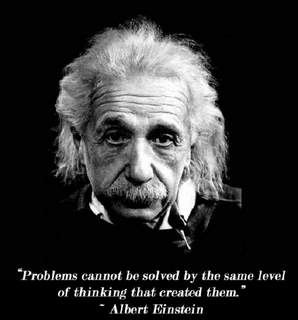
 It is generally true that most of the problems humanity suffers are created by humans. It is also generally true that humans eventually figure out solutions to those problems. However it is important to note that the two sets of humans — the problem-creators and problem-solvers — are disjoint sets. We can paraphrase Einstein’s astute observation: Problems cannot be solved by the same set of institutions and organizations that created them. India’s myriad modern problems have their genesis in one institution alone, the Congress party. In this post, I argue that for India to progress, Congress has to go.
Real Poverty
To set the context, allow me to stress one central fact that we tend to forget. We forget because it is too pervasive and its persistence makes it appear akin to a fact of nature, as if there is a certain inevitability about it. I am talking of India’s desperate poverty.
I am assuming here that India’s desperate poverty is common knowledge. Actually it isn’t. I have spoken to many educated Indians and after only a bit of probing realized that they don’t have a clue about how desperately poor India is. I tell them that if by some miracle (or disaster) we were to distribute all the resources (wealth, income, land, water, etc) absolutely equitably, it would of course eliminate inequality but all Indians will still be desperately poor. We can all agree that there are rich people in India but the numbers are relatively small, and their exceptional condition does not negate the basic truth that India is horrifyingly poor.
That it does not horrify the average Indian is a marvel to behold. I think they don’t find it horrifying partly because they accept it as a natural condition, partly because they have become inured to it, and partly as a coping mechanism through denial.
Poverty not Inevitable
Poverty is not an impossible problem to solve. For most of human history, poverty has been a persistent fact but it does not have to be anymore. The stock of knowledge, the technologies, institutional arrangements, resources both material and financial — all these essential ingredients for the elimination of poverty exists today, and which did not exist say a hundred years ago. One may have been forced to accept widespread poverty then but now accepting it is tantamount to helping in poverty’s persistence.
India has access to the knowledge required to make good policies that will help solve the problems India faces. Technology is easy enough to create, to import, to adopt, to adapt. Resources too India has: land, water, minerals, human capital. Admittedly, it is not too abundant but the resources are more than sufficient for India to be at least a middle-income country (say with per capita annual GDP of around $10k). Some rudimentary institutions are also there. There’s a judicial system. It works at times but it needs major re-engineering. It is overburdened and in some cases corrupt. There are legislative bodies but they are ridden with corruption and ineptitude.
All in all, most of the necessary ingredients exist for India to not have been a desperately poor country. (I keep repeating “desperately” in the hope that it sinks into the subconscious.) So what’s been missing from the list of ingredients?
Flawed Economic Policies
Perhaps the most important lesson that a study of economics teaches is that economic policies matter in how an economy performs. Think about economic policies as a recipe. You may have the all the best ingredients to make a mouthwatering dish, but if your recipe is bad, you are stuck with an unpalatable mess. Or you may have the best ingredients, and the best recipe, but if the cook is third-rate, you are once again looking at one hell of unappetizing disaster.
India is poor. It need not have been. Bad economic policies were followed. These bad economic policies were made by people.
Allow me to quote a couple of smart observers in this context. Brad DeLong, professor of economics at UC Berkeley (whom I admire immensely) wrote in 2001:
The conventional narrative of India’s post-World War II economic history begins with a disastrous wrong turn by India’s first prime minister, Jawaharlal Nehru, toward Fabian socialism, central planning, and an unbelievable quantity of bureaucratic red tape. This ‘license raj’ strangled the private sector and led to rampant corruption and massive inefficiency. As a result, India stagnated until bold neo-liberal economic reforms triggered by the currency crisis of 1991, and implemented by the government of Prime Minister Narasimha Rao and Finance Minister Manmohan Singh, unleashed its current wave of rapid economic growth – growth at a pace that promises to double average productivity levels and living standards in India every sixteen years.
Disastrous wrong turn by . . . Nehru. Keep that in mind. Here’s another assessment made by The Economist in 1991.
The hopes of 1947 have been betrayed. India, despite all its advantages and a generous supply of aid from the capitalist West (whose ‘wasteful’ societies it deplored), has achieved less than virtually any comparable third-world country. The cost in human terms has been staggering. Why has Indian development gone so tragically wrong? The short answer is this: the state has done far too much and far too little. It has crippled the economy, and burdened itself nearly to breaking point, by taking on jobs it has no business doing.
India achieved less than virtually any comparable third-world country. Staggering costs in human terms. Think about those bits. Why?
Arrogant, Ignorant, Dictators
The short answer it that the people at the helm of affairs have been arrogant, dictatorial, ignorant, and stupid. Nehru never listened to wise counsel. Once his mind was filled with socialistic nonsense, he did not deviate. He dictated, and the Congress party which was his fiefdom, followed. When Nehru died, within a short time his daughter Mrs Indira Gandhi (not related to Mahatma Gandhi although I have heard it said that M Gandhi had forced Feroze to change his Khan last name to Gandhi — for what reason I cannot fathom), another dictator, went about mercilessly strangling the Indian economy. She introduced the word “socialist” in the Indian constitution — thus adding steel straps to the straight-jacket that her father had fitted India.
Nehru-Gandhi family’s high-handed, wrong-headed, arrogant, ignorant policies have been entrenched in the Indian economy. The Congress party cannot change those policies. Why? Because to change policies they will have to admit that Nehru was an ignorant dictatorial failure. This they cannot do because their highway to power is built on the myth that Nehru and his descendants (and whoever they happen to be married to) are the wisest leaders that India ever had.
They Cannot Afford to Change
So also, no Nehru-Gandhi descendant can ever advocate policies that are actually good for India. Because any policy that are good for India is antithetical to the policies of the Nehru-Gandhi policies. Implementing good economic policies would be tantamount to committing political suicide for anyone from the Nehru-Gandhi, and by extension, the Congress cannot but continue with the failed policies.
For more on the failed policies, please see “THE PAST, PRESENT AND FUTURE OF INDUSTRIAL POLICY IN INDIA: ADAPTING TO THE CHANGING DOMESTIC AND INTERNATIONAL ENVIRONMENT” University of Cambridge, Working Paper No. 376 by Ajit Singh. Dec 2008. (The two quote above are from that paper.)
Here’s a bit from the abstract of the paper.
The paper suggests that industrial policy and planned economic development did not come to an end with the deregulation of India’s traditional investment regime in the 1980s and 1990s. . . . India requires a somewhat different industrial policy than that pursued in the Nehru-Mahalanobis era, or that has been followed since then.
I am sure that most of us don’t have the time or the inclination of reading economic papers. What we can do however is to think seriously about what we see going on around us.
Divide and Rule
As I wrote in a previous post, the Congress party inherited the rule of India from the colonial British. They inherited not just the institutions or the legal structure or the economic system: they also inherited the mindset of the British.
The British had a policy of “divide and rule.” The Congress does the same. It is forever dividing the country along caste and religious lines. One of the Nehru-Gandhi family house-boy, Dr Manmohan Singh, even went so far as to state baldly that people of one specific religion have first claim to India’s resources.
But let’s not soil our hands touching filth. So no more about Dr MM Singh.
Redistribution without Production
What really bugs me is the maniacal zeal in redistribution that the Congress has. It just does not understand — just like the communists — that the first thing to do is to create the conditions that will increase the production of goods and services; then redistribution makes some sense. But the Congress does not do so. Why?
My conjecture is that if production increases, then people will not be desperately poor. And if they are not desperately poor, they will become educated. If they become educated, what is uncommon knowledge (that the Nehru-Gandhi family screwed India over) will become common knowledge. If that becomes common knowledge, the people will vote them out.
The Nehru-Gandhi family are not professionally qualified. I doubt that any of them can actually even do a bank teller’s job. (Although they have sufficient stuff stashed away for a comfortable life till the end of time.)
The challenge we have is public education. Some how we have to make sufficient number of voters aware of the immense harm that the Congress party has done and why that party cannot but go down the same track of keeping India desperately poor.
Can Al-Qaeda Solve the Terrorism Problem?
The Congress party led by the Nehru-Gandhi family cannot and will not solve India’s problem because they created the problem in the first place and it was in their narrow selfish interest that they did so. Expecting them to solve the problem is like expecting Al-Qaeda to address the problem of terrorism.
We have a choice: either we bury the Congress party or we bury India. One or the other will happen. Which one is what we have to decide.


Sundried Atheist thank you for your reply. I couldn’t entirely understand it, but I guess that’s because there is so much I have yet to learn about religion and communism.
BTW do you have a blog of your own ?
LikeLike
huh?
wtf. dude patel go get a life.
scoot..
LikeLike
Now you just being judgemental about others without knowing muych about them. By what capacity did you decide that the commentors in this forum are weak in history? You seem to have a rabid mentality that propogates the virtues of despotism, Nepotism and you sure have a slave mentality, whrein theslave follows his masters and considers his descendants fit only to be ruled by his masters. thanks kabs
LikeLike
@Chanakya B
No I don’t have a blog. Maybe in the near future but not right now.
@Sriram
I have sent you an email. Check your inbox.
LikeLike
@sundried atheist
First thing , you mistaken, i am saying IIM’s can’t run country. even Dhirubhai amabani can cut the competition with bribe but that’s always not an option in politics. Running a country like India where most part is uneducated requires a things that only comes in blood, family. I am not saying its utmost impossible there are really good Politicians too (Madhu dandvate, Mamta benerjee, chidambaram ) but get one of us so-called-thinkers against Lalu Yadav and win a even local corporation election. Do you think is it possible?
second I ain’t congress lover either seeing all kinds of scandals coming out day in day out from their ministers, i still think its better then Madhu Koda and sukhram. If you are or have some in big businesses in India, talk to them, which government is good? Congress or BJP? In congress the slogan is ” khao or khane do” but get work done. while in BJP never have experience of ruling this country for long, slogan is “koi nahi khaega (hamare siva)” and dont do anyone’s work whether legit or not.
Third: As you mentioned about conning country by Nehru family for so long. i would say why no one came to pick this lead. If you see history of Indian politics, most parties got chance to run country atleast once. why they didn’t got reelected for another term? why congress mostly sweep clean election after they(BJP, UF, Jantadal) leave? wouldn’t you think other parties lack administration experience of such large diversified country?
forth: Few mentioned me as congress slave mentality. I know who Sardar Patel was and could have done if he was there as PM of Independent India. about my own political experience, let me tell you my brother is sitting BJP MLA in Gujarat. side by side i have fought three local assembly election with him. I myself got ticket for Corporations election (not boasting myself), nevertheless i choose to become something else rather then politician.
Fifth: Sardarji being Puppet. He is not politician. He is good Manager and CEO with much foresight and knows how to bring investment to this country. Being Politician and Visionary is hard thing to find. so its Congress made system, let Sonia defuse all Political problems while Mr. Singh focus on what needs to done to country’s core issue. How many times you have visited even Local Mayor’s office or CM’s office even. Life is different then what we see/read in news paper.
Sixth: what i wrote in earlier email was from my view of seeing two separate words very closely. Have you worked for OBAMA election? I did. because it fascinates me to learn of political system of different kind. Corruption or lobbying exists everywhere. India or US. beside i mentioned my citizenship or my education to just update folks that i too read all kind newspapers that you do, in addition to what i have seen from inside is almost different.
beside @kautilya i tell you one for sure. You are welcome.
and last… You guys reading all kind of media and talking about democracy and blasting congress led government and all who does corruption, Do you have courage, capacity (money wiseand time like satyendra Dubey to change system? If not you know what you should do…
Jai Hind
LikeLike
@Nilesh Patel
“First thing , you mistaken, i am saying IIM’s can’t run country. even Dhirubhai amabani can cut the competition with bribe but that’s always not an option in politics. Running a country like India where most part is uneducated requires a things that only comes in blood, family. I am not saying its utmost impossible there are really good Politicians too (Madhu dandvate, Mamta benerjee, chidambaram ) but get one of us so-called-thinkers against Lalu Yadav and win a even local corporation election. Do you think is it possible?”
Did you really say that, well maybe I missed on that one. Because that is how your post was souding. Anyway, if you have had a change of heart I will accept your new postion gracefully.
Again you are perpetuating that “myth” that running a country runs in one’s blood. Its a completely false and falacious statement and contrary to the etchics of a living and working Democracy. What you are suggesting is despotism in the guise of a democracy and it can’t be accepted under any circumsntaces.
You say that millions in this country and uneducated but do you ever wonder why it is so. Maybe it has something to do with the policies of our rulers, and since the Nehru Gandhi clan has been running this country for a better part of these sixty years, its pefectly safe to derive that this family is responsible for these hungry and uneducated millions. I am not even getting into the nitty gritty of what the Congress has and is doing.
If your choice of a good minister is someone like Chidambaram, who is the very personification of ego masturbation, a woman like Mamata Banerjee who is the epitome of stupidity and self riteousness, then I don’t thin I need to comment futher on that.
Yes, people can vote for the right candidates given the right education and by by education I don’t mean the mindless brainwashing that goes on in the name of education in India.
You see the Congress Party wants to keep on ruling this country no matter what and it is for this very purpose that they keep the masses uneducated, half and naked. Its the old trick that Maharjas used to play. They would keep their citizens half naked and hungry and then distribute food and clothes. This turns them into saviours and people don’t bother to see that it is same Maharaja who created the problem in the first place.
“second I ain’t congress lover either seeing all kinds of scandals coming out day in day out from their ministers, i still think its better then Madhu Koda and sukhram. If you are or have some in big businesses in India, talk to them, which government is good? Congress or BJP? In congress the slogan is ” khao or khane do” but get work done. while in BJP never have experience of ruling this country for long, slogan is “koi nahi khaega (hamare siva)” and dont do anyone’s work whether legit or not.”
Well aparently you were sounding like a Megaphone for the Congress and that’s why you started your first post by proclaiming the following, ‘Love live India” and “Long Live Congress”. Why would someone who ‘ain’t” no Congress lover make such a statement. As far as buisness is concerned, yes I agree with you, people do favour the Congress Party since it facilitates “corruption”. This does not mean that there are no other good people left in this country or there is a shortage of will to work for the betterment of this country.
“Third: As you mentioned about conning country by Nehru family for so long. i would say why no one came to pick this lead. If you see history of Indian politics, most parties got chance to run country atleast once. why they didn’t got reelected for another term? why congress mostly sweep clean election after they(BJP, UF, Jantadal) leave? wouldn’t you think other parties lack administration experience of such large diversified country?”
If you are talking post partition then I will say that yes, not many have taken the lead. BJP tried and it failed since it had a fractured mandate and could never implement its policies fully. The Congress Party has been and is using every religious body especially the cbhurch to garner votes in its favour. BJP today lacks the vision that should be the hallmark of a political party that wishes to have a national appeal. Congress knows its way around the political muddle and uses its experince to swallow all those who wish to do something. Its just like the proverbial, “big fish eat small fish”
However does that justify the actions of the Congress part, not it does not. It only enforces what we have saying all along that Congress is bad for this country and hence it needs to go.
“forth: Few mentioned me as congress slave mentality. I know who Sardar Patel was and could have done if he was there as PM of Independent India. about my own political experience, let me tell you my brother is sitting BJP MLA in Gujarat. side by side i have fought three local assembly election with him. I myself got ticket for Corporations election (not boasting myself), nevertheless i choose to become something else rather then politician.”
Well that’s your fault. You should have contested the elections and made your voice heard. Look no war can be won without shedding blood and if you want change you should know that, that blood could be yours. You have lost whatever respect I might have had for you by saying that you ran away from the battle field because politics is too dirty for you. Look if you have it in you what it takes to become a politician then go ahead, what is stopping you. I really wish I had those qualities.
Sardar Patel was a Statesman who lost out to Nehru since he didnot lick Gandhi’s unmentionable parts unlike Nehru. Gandhi opposed him when he asked for a population transfer and today we are sufering Gandhi’s folly in the name of Jihad and seperatism.
“Fifth: Sardarji being Puppet. He is not politician. He is good Manager and CEO with much foresight and knows how to bring investment to this country. Being Politician and Visionary is hard thing to find. so its Congress made system, let Sonia defuse all Political problems while Mr. Singh focus on what needs to done to country’s core issue. How many times you have visited even Local Mayor’s office or CM’s office even. Life is different then what we see/read in news paper.”
Good, so you agree. Then what you defending the Congress part for. Do you know why Sonia hated Narsimha Rao? Because he refused to play a puppet to Madam Sonia Gandhi and some say that he did not die a normal death. I feel it could be possible given the voilent nature of gandhi family and their Despotic heritage.
“Sixth: what i wrote in earlier email was from my view of seeing two separate words very closely. Have you worked for OBAMA election? I did. because it fascinates me to learn of political system of different kind. Corruption or lobbying exists everywhere. India or US. beside i mentioned my citizenship or my education to just update folks that i too read all kind newspapers that you do, in addition to what i have seen from inside is almost different.”
I am sorry, I didnot work for the Obama election since I was in India then as I have been in India since the last two years. I left the USA way back in 2008 and I have never looked back eversince. I had my calling and I came back to India because becoming a US citizen was never a part my dreams or desires.
By the way I would have rooted for the republican Party if it had not been for that stupid Palin woman who is Anti-Science. As for Obama he is the guy who will ruin America. He has already pissed the most key allies of USA and that includes India.
I know why most Hindus living in the USA root for the Democratic party, since they believe the Republicans, most of whom are evangelicals, will work to convert them. But the fact is that the Democrats are the ones who they should be aware of.
Besides the Nixon era, Republicans have always been pro India and that is what matters most to me. Democrats have always been pro pakistan and anti every other free country.
LikeLike
wrote too much about politics,
solution i think to forward india in positive direction
My 2 cents
Elect the electable. Don’t make hung parliament that boast hoarse trading. party switching. portfolio sharing. mid-term election. (Half of the corruption issues solves right over there). even if wrong person got elected, there are very few chances he can become minister as there are many good candidate of elected parties to choose from. competition kills wrong over right at that place to show clean image of government to the public.to You can see current government of Mr. Singh is almost like that. He is having power to dictate thing what is right and i assume no one doubt his genuineness. with this chances are country can certainly go forward.
LikeLike
Subdried Atheist…its a pleasure, honor & a privilege to read your response to Niles’s post. Kudos to you for writing such an insightful post buddy! 🙂 You have IMO blown to smithereens the grandstanding & pontification reflected in Nilesh’s posts…I bow to thee SA! Oh I luv internet…I get to read and absorb such wonderful articulations 😀
LikeLike
Nilesh good to hear from you. Seriously, as sundried atheist had underscored, the reason for my outburst was to dispel your myth of ‘only dynasty saves’. PV Narasimha Rao had initiated the reforms and Vajpayee had completed 5 yrs with reforms going on full steam. India is too big to fall, however the population being a whopping 4 times that of USA, essentially is dampening any acquired riches. I am related to a cabinet minister who served in both Indira and Rajiv Gandhis govts, for 15 yrs. Khao aur khanedo is the only policy they all approve. The nation is running because of ‘janedo’ religion of hindus. All political parties including the communist and muslim in India are corrupt; BJP should resort to same political culture for self preservation purposes. If they survive they can serve and if they are dead obviously they cannot serve. Kodas and Mayavathis are the scapegoats; Andhras Y. Samuel Rajasekhara Reddy had amassed an estimated 2.000 crores. A TV channel, a news paper and a bunch of industries can be cited as his accomplishments in just one term as CM. Congress in Andhra had bought votes for Rs 500 apiece. His son now wants to run the state as CM, with hardly 5 months experience as an MP. He will continue to keep busy multiplying the ill begotten wealth. His brothers in law, brother Anil Kumar collects millions from west and uses the cash to convert poor hindus in South. Mahas Pawar has amassed billions. Corrupt BJP politicians are probably collecting only loose change if any.
LikeLike
@sundried atheist
“There never was a time when Hindus were united. Even Abhrahmic religions have proven unsucessful at times in uniting people under the banner of one God and one faith, let alone Hinduism.”
First of all, you are confusing many issues here. The kind of unity I am referring to is a cultural unity–Now India has always had that before it became overrun by Islam. There were many kingdoms which fought one another but they mostly had a culture that was indigenous and not imported and had cultural unity in this respect–and by indigenous I mean a product of all things native–i.e. Hinduism, Buddhism, Jainism, Sikhism, even counting Zoroastirans as they adapted to the native culture, and while keeping their religion did not challenge the native ones….Now India has always had unity in a cultural sense–that Hindus had no unity is incorrect and is repeated by the new age liberal historians who promote liberalism by saying India never had unity…You sense of “unity” is something arising out of the modern concept of nation state which is a fairly recent concept. Many European countries such as Italy were also warring independent kingdoms until recently, but this does not mean that they did not have cultural unity.
You point about Indians being non imperialistic is correct–this is largely due to the fact that India was wealthy and not overpopulated and poor like now …agriculture was all year round in mild weather and life was not harsh like in Northern Europe requiring people to migrate to other lands…So Hindus were not in want back then–kind of like being in America now in terms of resources…
However, pluralism in thinking and acceptance of divergent outlooks does not mean lack of unity at a cultural plane–pluralism in culture and thinking back then was different from the multicultural sameness imposed by liberal democracy today…and by no means implies a lack of unity when it came to culture….
“If Hindus are to be united, it is not Hindu theology that will unite them but the feeling of fighting against an evil so dark that will blot out the very existance of freedom of though that is an integral part of the Hindu ethos.”
Actually Hindus would do well to return to their natural plural way of existing as opposed to the artificial liberalism imposed from above by the state. Why must the Hindu elite be liberal as opposed to conservative? What India needs is a conservative revolution, and by this I mean it in the sense implied by the word revolution (re-volvere–a turning back)–a turning back to what was disrupted, the original ideals of a plural Hindu world view. It’s due to the HIndu plural outlook surviving in a sickly form that democracy functions at all in India–not because some fool Nehru imposed liberal democratic ideals upon the people through the state–
But with the continual deracination brought about by the liberal state with its imported artificial ideals, and the brainwashing going on in the institutions of learning and via the media to force the people to accept mythologies created by the state this will not be easy–there has to be Hindu revivalism as seen in places like Gujrat on a massive scale–and by “HIndu” revivalism I include all identities native to India (sikhism, jainism, buddhism etc.)–a people has to awaken to who they are after being kept in the dark for the last 60+ years by the state…and they must wake up…
LikeLike
@sundried atheist
“There never was a time when Hindus were united. Even Abhrahmic religions have proven unsucessful at times in uniting people under the banner of one God and one faith, let alone Hinduism.”
First of all, you are confusing many issues here. The kind of unity I am referring to is a cultural unity–Now India has always had that before it became overrun by Islam. There were many kingdoms which fought one another but they mostly had a culture that was indigenous and not imported and had cultural unity in this respect–and by indigenous I mean a product of all things native–i.e. Hinduism, Buddhism, Jainism, Sikhism, even counting Zoroastirans as they adapted to the native culture, and while keeping their religion did not challenge the native ones….Now India has always had unity in a cultural sense–that Hindus had no unity is incorrect and is repeated by the new age liberal historians who promote liberalism by saying India never had unity…Your sense of “unity” is something arising out of the modern concept of nation state which is a fairly recent concept. Many European countries such as Italy were also warring independent kingdoms until recently, but this does not mean that they did not have cultural unity.
Your point about Indians being non imperialistic is correct–this is largely due to the fact that India was wealthy and not overpopulated and poor like now …agriculture was all year round in mild weather and life was not harsh like in Northern Europe requiring people to migrate to other lands…So Hindus were not in want back then–kind of like being in America now in terms of resources…
However, pluralism in thinking and acceptance of divergent outlooks does not mean lack of unity at a cultural plane–pluralism in culture and thinking back then was different from the multicultural sameness imposed by liberal democracy today…and by no means implies a lack of unity when it came to culture….
“If Hindus are to be united, it is not Hindu theology that will unite them but the feeling of fighting against an evil so dark that will blot out the very existance of freedom of though that is an integral part of the Hindu ethos.”
Actually Hindus would do well to return to their natural plural way of existing as opposed to the artificial liberalism imposed from above by the state. Why must the Hindu elite be liberal as opposed to conservative? What India needs is a conservative revolution, and by this I mean it in the sense implied by the word revolution (re-volvere–a turning back)–a turning back to what was disrupted, the original ideals of a plural Hindu world view. It’s due to the HIndu plural outlook surviving in a sickly form that democracy functions at all in India–not because some fool Nehru imposed liberal democratic ideals upon the people through the state–
But with the continual deracination brought about by the liberal state with its imported artificial ideals, and the brainwashing going on in the institutions of learning and via the media to force the people to accept mythologies created by the state this will not be easy–there has to be Hindu revivalism as seen in places like Gujrat on a massive scale–and by “HIndu” revivalism I include all identities native to India (sikhism, jainism, buddhism etc.)–a people has to awaken to who they are after being kept in the dark for the last 60+ years by the state…and they must wake up…
And when I say HIndus need to have a united front it is in this sense–they have been disrupted culturally due to invasions and need to heal culturally–this requires a “reawakening” of a peoples. This large scale “reawakening” can put a stop to the sham culture that the Congress tries to perpetuate to keep itself in power…
LikeLike
Hello Larissa, quite some interesting points you have over there. Let us see if I got what you said correctly this. Apparently I seem to be getting you all wrong every time you post something and then rather shamefully you have put up with a “moron” like me and then repost your comment in the hopes that your views and ideas go through my numb skull.
“First of all, you are confusing many issues here.
Yes, that’s right I am the one who is confusing issues over here. Silly me just can’t get anything right
The kind of unity I am referring to is a cultural unity–Now India has always had that before it became overrun by Islam.
Oh! okay I get you now. You were basically trying to invent a new figure of speech in the English language. Silly me, but then again how a moron like me could know.
Sadly when I tried to find a word called “Cultural unity’ in a dictionary, I couldn’t find one. I guess they must have forgotten to put it over there. Or is it that you made up this “cultural Unity” which apparently means nothing.
or were you referring to the mutual cultural appreciation and respect. Of course if that is what you were trying to say then its a different matter all together, but that’s not called “Unity”.
Unity is best defined as a state of oneness and this is how most if not all understand this word.
Now if you wish to make up your own vocabulary, its fine with me, but the thing is you can’t expect others to understand the hidden meanings in your words since you had never even used the word cultural unity in your previous post. I guess you were too busy linking appreciating the concept of Eugenics according to which Hindus have genetically adapted themselves to slavery or something like that.
There were many kingdoms which fought one another but they mostly had a culture that was indigenous and not imported and had cultural unity in this respect–and by indigenous I mean a product of all things native–i.e. Hinduism, Buddhism, Jainism, Sikhism, even counting Zoroastirans as they adapted to the native culture, and while keeping their religion did not challenge the native ones”
What is wrong with an imported Culture Larissa is it works well for you. The Corporate Culture in India is imported although it has been bent badly. The use of scientific technology is imported and so is the concept of a Parliamentary democracy. I don’t see any harm in any of these.
Plus I don’t support Hindus because I believe in any of their deities, but rather because Hinduism is the only culture that allows one not to believe or not to believe. No other culture in this world has this freedom. Even if Hinduism had been imported with all the qualities it has, I would have still accepted it as my own unless it was imposed on me.
Abhrahamic faiths are not just false, they represent a kind of untruth that is not just wrong but evil and that is why I reject and oppose them. Had Islam had the same humanistic qualities as Hinduism has I would have gladly accepted as a way of life too. But it is not and hence this fight.
I don’t fight Islam because it was created in the deserts of Arabia, or Christianity for that matter because it was a created by a group of desert tribes. Hell no, my problem is that they are dangerous, evil, elitist and have a scope for destroying this world.
As for Buddhists and Hindus living peace. Maybe you should read history and see how the Kushan kings removed the very last traces of Hinduism from the Balkh region, in present day Afghanistan. You could also do a little bit of reading as to how Hindus were persecuted by the Khmer regime in Cambodia.
Even today the Hindus living in Buddhist Myanmar, Sri Lanka, Cambodia are being persecuted by peace loving Buddhists.
Thousand of Hindu temples were destroyed by the Kushans alone. So I guess you need to do a little bit of more reading before you claim that Hindus and Buddhists were like the best of buddies and then Islam came as the spoil sport.
had it not been Adi Shakarcharya, today all of India would have been Buddhist and maybe later Moslem. Buddhism is a Proselytizing religion, just like Islam and Christianity and like any other religion that is involved in Proselytizing it has an aggressive streak to obtain converts. How else do you think that so many South East Asian countries which were formerly Hindus became Buddhist.
Your sense of “unity” is something arising out of the modern concept of nation state which is a fairly recent concept. Many European countries such as Italy were also warring independent kingdoms until recently, but this does not mean that they did not have cultural unity.
Again you are putting up a straw man argument. What is this cultural unity you are talking about? What I said in my post was the Hindus can’t be united on basis of theology, because Hinduism has a wide range of theologies and some are as different as chalk and cheese. Thus the question of uniting people on the basis on the basis of theology does not arise.
However what is common amongst all Hindus is that they like to be free and not told to believe or not to believe or whatever.
If this freedom of theirs is threatened there are great chances that they will come together.
Then you went into strange nation states meanderings business which has nothing to do with my post.
Your point about Indians being non imperialistic is correct–this is largely due to the fact that India was wealthy and not overpopulated and poor like now …agriculture was all year round in mild weather and life was not harsh like in Northern Europe requiring people to migrate to other lands…So Hindus were not in want back then–kind of like being in America now in terms of resources…
No, it has nothing to do with having everything in plenty. The reason is the Hindu concept of Santusthi. Even if Hindus didn’t have enough, they would rather live with their meagre resources than go out and kill someone and snatch it from someone.
While this sounds like a noble idea, the fact is that it can be very dangerous and leave you defenceless when under siege because when you detach yourself and don’t have an ambition, its likely that some else will take over what you have now. If you want to be heard and dominate you have to assert yourself aggressively and not be passive about it.
You can either rule or be ruled, there is no second way unless you are a poet or a madman.
However, pluralism in thinking and acceptance of divergent outlooks does not mean lack of unity at a cultural plane–pluralism in culture and thinking back then was different from the multicultural sameness imposed by liberal democracy today…and by no means implies a lack of unity when it came to culture….
So what are you trying to say here?
Actually Hindus would do well to return to their natural plural way of existing as opposed to the artificial liberalism imposed from above by the state. Why must the Hindu elite be liberal as opposed to conservative? What India needs is a conservative revolution, and by this I mean it in the sense implied by the word revolution (re-volvere–a turning back)–a turning back to what was disrupted, the original ideals of a plural Hindu world view. It’s due to the HIndu plural outlook surviving in a sickly form that democracy functions at all in India–not because some fool Nehru imposed liberal democratic ideals upon the people through the state–
Wrong. Hindus have to become more aggressive, more asserting and less tolerant of absurd and stupid notions of equality of all faiths. What has pluralism given Hindus besides slavery. Absolutely nothing.
I say that return to the inner meaning of what Hinduism stands for, which is truth, justice and critically of though and robustness in action.
And when I say HIndus need to have a united front it is in this sense–they have been disrupted culturally due to invasions and need to heal culturally–this requires a “reawakening” of a peoples. This large scale “reawakening” can put a stop to the sham culture that the Congress tries to perpetuate to keep itself in power…
The reason why their culture could be disrupted in the first place was because of a cultural weakness of Hindus in the first place. Set those weaknesses right and everything will fall in its due place
LikeLike
Sundried athiest, I suggest you do some reading of history–both of classical India and of the classical Western world of which you display very scant knowledge (not sure what your studies have been in, but clearly it is not history of civilizations). Were the Greeks united theologically? No. But all the Greek kingdoms were united by a certain culture–they referred to others as barbarian and themselves as Hellene and were united for the Greek cause in the face of barbarians. Unity in the cultural sense is a very big deal. India had this kind of unity–that is why it had civilization–today it has none, which is why it does not create but only imitates, and in a very second hand way at that. When I say plural thinking, I mean culture in that sense. The Greco-Roman world, classical Perisa and the classical civilized world in general both in east and west were a plural culture in this sense–that is why people never fought over religion, although the warious kingdoms went to war for territory. When did I say pluralism means being tolerant of those who are intolerant towards you?
“united theologically”
Again you speak in terms which are meaningless with respect to Hindu culture. A culture that has always respected a plural world view is not the same as a culture that is untied “theologically”…Again you import foreign concepts to Indian history, just like you say HIndus did not have unity. Indians were united in that they had a creative, productive culture which was not copied or borrowed, but distinctly Indian, and constitured an Indic world view. Despite the varieties amongst the people, there was something that was distinctly “Indian”, just as there was an outlook that was distinctly “Greek.”
“What is this cultural unity you are talking about? What I said in my post was the Hindus can’t be united on basis of theology, because Hinduism has a wide range of theologies and some are as different as chalk and cheese. Thus the question of uniting people on the basis on the basis of theology does not arise”
No the theology is not different as “chalk and cheese”–no–because they stem from a plural culture and one view does not try to impose itself by violence upon others, as the “theology” of the semites, which tries to root out all that is opposed to it or challenges it in thought. Just as there was no contradiction in a Julius Caesar in being an atheist but also performing the function of the priest of Jupiter, a plural outlook gives space to viewpoints that exist harmoniously within the whole–it does not stamp out everything that is opposed to a monolithic outlook–you can easily see the progression from Christianity, to Marxism, to totalitarianism–one monolithic view suceeds the previous monolithic viewpoint…these three all have striking similarities….
“Sadly when I tried to find a word called “Cultural unity’ in a dictionary, I couldn’t find one. I guess they must have forgotten to put it over there. Or is it that you made up this “cultural Unity” which apparently means nothing.”
Well some things are understood when a culture is studied in depth over the course of years and not through the internet and wikipedia.
“What is wrong with an imported Culture Larissa is it works well for you. The Corporate Culture in India is imported although it has been bent badly. The use of scientific technology is imported and so is the concept of a Parliamentary democracy. I don’t see any harm in any of these.”
There is nothing wrong with importing something good. HInduism has always allowed for that–what is important is that the imported item graducally be transformed into something “native” so that it gradually becomes second nature of a peoples without disrupting the dominant identity of a peoples. A civilization and a culture allows people to do that, absorb the new without disruption of identities…A culture is not created overnight and disruptions to it which are violent can take years to heal….In the case of India “healing” is going to take generations…
As for the importation of items like parliamentary democracy, it is debatable whether this is a good thing…Something that works in a Western European context where the population is highly educated, might not necessarily work in a place like India with swathes of illiterates…Democracy in the original sense in Greece was something local and tribal. But again this is another topic in itself….
“Wrong. Hindus have to become more aggressive, more asserting and less tolerant of absurd and stupid notions of equality of all faiths. What has pluralism given Hindus besides slavery. Absolutely nothing.”
Again you should go and read Indian history and why Indians were a defeated peoples. It has nothing to do with pluralism. India being a civilized, insular, self-sufficient, culture, did not realize the extent of the barbarian threats to it from the outside–especially the Muslim one. Life was bountiful and plentiful in India back then, Indians were not constantly fighting for resources like people in Arabia with nothing but water and sand. Even the Greek invasions of Alexander were not that disruptive because the culture absorbed it and the genius of the culture transformed it into something its own(look at the harmonious Hellenic Greek buddhist civilization in Afghanistan which was later destroyed by barbarians). Moreover, they had adopted religions which had turned to pacifism like Buddhism (although Buddhism initially was by no means a religion which preached pacifism when you read the original Pali sources–today buddhism is famous for everything it was not initially….) Also, people did not realize the extent to which the semetic cults root out all view point oppposed to a monolithic one. For instance, in Kashmir after the Islamic invasions, the Sufis tricked Hindus into becoming Sufis by “takiya” or deception–many Hindus who were not converted outright by the sword were drawn to it thinking it was just another sect as in Hinduism…The defeat of Hindus had to do with not understanding the nature and extent of the barbarian threat. Moreover, the Hindu kingdoms were not united politically (as opposed to culturally) and fought with each other. If you read Bernier’s travels in the Mulsim court, he notices that the Hindu Rajput princes if united could have easily overthrown the Muslims…but they fought with each other instead of a common enemy and were shorsighted. So the reasons for India’s defeat in the face of brabarian attacks are many. It has nothing to really do with pluralism. Your modern day education makes you confuse pluralism of classical civilizations with ‘multiculturalism” which is something artificially imposed from the state to reduce the population to a monolithic, deracinated whole.
“No, it has nothing to do with having everything in plenty. The reason is the Hindu concept of Santusthi. Even if Hindus didn’t have enough, they would rather live with their meagre resources than go out and kill someone and snatch it from someone.”
Again you don’t seem to know much about your culture. Ever read the gita? Its all about fighting for a just cause without hating the enemy. Again read Hinduism in the whole, not parts. Again this will take you some years of study.
LikeLike
@sundried atheist
Sundried athiest, I suggest you do some reading of history–both of classical India and of the classical Western world of which you display very scant knowledge (not sure what your studies have been in, but clearly it is not history of civilizations). Were the Greeks united theologically? No. But all the Greek kingdoms were united by a certain culture–they referred to others as barbarian and themselves as Hellene and were united for the Greek cause in the face of barbarians. Unity in the cultural sense is a very big deal. India had this kind of unity–that is why it had civilization–today it has none, which is why it does not create but only imitates, and in a very second hand way at that. When I say plural thinking, I mean culture in that sense. The Greco-Roman world, classical Perisa and the classical civilized world in general both in east and west were a plural culture in this sense–that is why people never fought over religion, although the warious kingdoms went to war for territory. When did I say pluralism means being tolerant of those who are intolerant towards you?
“united theologically”
Again you speak in terms which are meaningless with respect to Hindu culture. A culture that has always respected a plural world view is not the same as a culture that is untied “theologically”…Again you import foreign concepts to Indian history, just like you say HIndus did not have unity. Indians were united in that they had a creative, productive culture which was not copied or borrowed, but distinctly Indian, and constitured an Indic world view. Despite the varieties amongst the people, there was something that was distinctly “Indian”, just as there was an outlook that was distinctly “Greek.”
“What is this cultural unity you are talking about? What I said in my post was the Hindus can’t be united on basis of theology, because Hinduism has a wide range of theologies and some are as different as chalk and cheese. Thus the question of uniting people on the basis on the basis of theology does not arise”
No the theology is not different as “chalk and cheese”–no–because they stem from a plural culture and one view does not try to impose itself by violence upon others, as the “theology” of the semites, which tries to root out all that is opposed to it or challenges it in thought. Just as there was no contradiction in a Julius Caesar in being an atheist but also performing the function of the priest of Jupiter, a plural outlook gives space to viewpoints that exist harmoniously within the whole–it does not stamp out everything that is opposed to a monolithic outlook–you can easily see the progression from Christianity, to Marxism, to totalitarianism–one monolithic view suceeds the previous monolithic viewpoint…these three all have striking similarities….
“Sadly when I tried to find a word called “Cultural unity’ in a dictionary, I couldn’t find one. I guess they must have forgotten to put it over there. Or is it that you made up this “cultural Unity” which apparently means nothing.”
Well some things are understood when a culture is studied in depth over the course of years and not through the internet and wikipedia.
“What is wrong with an imported Culture Larissa is it works well for you. The Corporate Culture in India is imported although it has been bent badly. The use of scientific technology is imported and so is the concept of a Parliamentary democracy. I don’t see any harm in any of these.”
There is nothing wrong with importing something good. HInduism has always allowed for that–what is important is that the imported item graducally be transformed into something “native” so that it gradually becomes second nature of a peoples without disrupting the dominant identity of a peoples. A civilization and a culture allows people to do that, absorb the new without disruption of identities…A culture is not created overnight and disruptions to it which are violent can take years to heal….In the case of India “healing” is going to take generations…
As for the importation of items like parliamentary democracy, it is debatable whether this is a good thing…Something that works in a Western European context where the population is highly educated, might not necessarily work in a place like India with swathes of illiterates…Democracy in the original sense in Greece was something local and tribal. But again this is another topic in itself….
“Wrong. Hindus have to become more aggressive, more asserting and less tolerant of absurd and stupid notions of equality of all faiths. What has pluralism given Hindus besides slavery. Absolutely nothing.”
Again you should go and read Indian history and why Indians were a defeated peoples. It has nothing to do with pluralism. India being a civilized, insular, self-sufficient, culture, did not realize the extent of the barbarian threats to it from the outside–especially the Muslim one. Life was bountiful and plentiful in India back then, Indians were not constantly fighting for resources like people in Arabia with nothing but water and sand. Even the Greek invasions of Alexander were not that disruptive because the culture absorbed it and the genius of the culture transformed it into something its own(look at the harmonious Hellenic Greek buddhist civilization in Afghanistan which was later destroyed by barbarians). Moreover, they had adopted religions which had turned to pacifism like Buddhism (although Buddhism initially was by no means a religion which preached pacifism when you read the original Pali sources–today buddhism is famous for everything it was not initially….) Also, people did not realize the extent to which the semetic cults root out all view point oppposed to a monolithic one. For instance, in Kashmir after the Islamic invasions, the Sufis tricked Hindus into becoming Sufis by “takiya” or deception–many Hindus who were not converted outright by the sword were drawn to it thinking it was just another sect as in Hinduism…The defeat of Hindus had to do with not understanding the nature and extent of the barbarian threat. Moreover, the Hindu kingdoms were not united politically (as opposed to culturally) and fought with each other. If you read Bernier’s travels in the Mulsim court, he notices that the Hindu Rajput princes if united could have easily overthrown the Muslims…but they fought with each other instead of a common enemy and were shorsighted. So the reasons for India’s defeat in the face of brabarian attacks are many. It has nothing to really do with pluralism. Your modern day education makes you confuse pluralism of classical civilizations with ‘multiculturalism” which is something artificially imposed from the state to reduce the population to a monolithic, deracinated whole.
“No, it has nothing to do with having everything in plenty. The reason is the Hindu concept of Santusthi. Even if Hindus didn’t have enough, they would rather live with their meagre resources than go out and kill someone and snatch it from someone.”
Again you don’t seem to know much about your culture. Ever read the gita? Its all about fighting for a just cause without hating the enemy. Again read Hinduism in the whole, not parts. Again this will take you some years of study.
also I have to respond to your comments on buddhism some other time…in a hurry
LikeLike
Sundried atheist and Larissas,
both your posts make a compelling reading and are very informative, I have a feeling your arguments are more to complement than contradict eachother.
Sundried atheist u wrote: However what is common amongst all Hindus is that they like to be free and not told to believe or not to believe or whatever.If this freedom of theirs is threatened there are great chances that they will come together. end quote.
Supreme court I think back in 50s/60s has defined a ‘hindu’ as one who believes in vedas, with which I agree. Vedas explain: (individual atma)Soul and Brahma (paramatma) the creator concept ALONG WITH Dharma (duty), Karma, yoga, reincarnation and finally moksha as the core constituents of hindu faith. Carvaka (google) and nastiks were tolerated and were not persecuted, just the way Buddha was allowed to live peacefully until he died at 80. What is shocking and unfair though is the fact that the above core hindu doctrine is passed off as buddhism in contemporary world. Its the responsibility of hindus to explain this historical truth to people thru the medium of web blogs. Not to claim patent rights but just to right the academic plagiarism.
On a side note, interested to see the Caucasians preaching hinduism, especially americans? –explore/ visit-allwhite hindu monastery of http://www.himalayan academy.com, Dr. Frank Morales, Ph.D. of http://www.dharmacentral.com/…Dr. David Frawley of http://www.vedanet.com/..i salute these americans, with all humility.
Indians thus can not claim exclusive rights to hindu faith anymore, in fact it is not desirable (we are guilty of ignoring Balinese hindus already). Some Indians not only defame a great religion but also are downgrading it to one as meaningless as the Bahaii faith. Peace. Surya, Chicag
LikeLike
David Frawley of http://www.vedanet.com/..i salute these americans, with all humility.
i don’t. they turn HInduism into a pop religion and repel intelligent people (westerners included)–especially the Frawleys–dangerous hacks–
LikeLike
Larissa,
Pleeease don’t be sooo verrry self centered, do realize hindus are now operating under self preservation mode. Just in case you missed it, hindus (and buddhists) are surrounded by abrahamists. It is these above great american hindu monks that will stand thru thick and thin as warriors warding off their fellow westerners who are waging a new age crusade. Just LET GO, I do understand “someone else” invading u r privacy. But living in US, to me you sound mean. Very mean indeed. The above monks were embraced by deshi pontiffs, shedding their traditional prejudice, and were all awarded ‘acharya’ title FYI.
LikeLike
Hello Surya
I just wanted to leave my two cents on what you said above since you have said something really interesting above.
There are basically three varieties of people, as per my observation and information, who convert to mainstream Hinduism or a sub sect of Hinduism in the West:
1. The Serious converts
These are people who are well educated and they convert to Hinduism with their eyes open. These people are mostly to be found in Europe and not so much in the USA. Out of the people you have mentioned above, I have personally metDavid Frawley and I feel that he is someone who is a serious researcher and is genuinely concerned about the excesses of Christian Evangelism in India.
people like him don’t convert out of ignorance or a need to feel different or out of a sense of frustration out of their religion of upbringing, which in most cases is Christianity. Far from it they convert out of firm conviction that Hinduism offers them a better and more moral way of life.
,b>2. The Hippy
The hippy converts are not usually very educated; while they might be educated in some cases that is usually not the case. People like these do more harm than good to the cause of Hinduism as most people tend to look Hinduism as some sort of strange Eastern Sect.
In most cases I usually count the Hare Krishna’s from this category. A large number of former Hare Krishna’s reconvert back to Christianity and end up becoming severe critics of Hinduism and condemn it in very harsh words.
A number of these Hare Krishna’s can be found to have become Evangelical Christians who are the most dangerous of the lot.
3. The National Socialist Hindus
These are the most harmful of all converts. While they are not so popularly know, but they do exist and I have seen them following a strange form of Hinduism combined with European paganism.
They believe that the Vedas were written by Caucasians and are supporters of the unscientific Aryan Race myth.
One of the foremost almost such Neo Nazi converts was Devika Rani who converted to Hinduism way back in the 1930’s.
Although these people “claim” to be following the Vedic way of life, they are mostly National Socialists and are not averse to killing of animals or human beings to achieve their aims.
Some of these National Socialists are pretty educated and can do a lot of harm to the way people view Hinduism and Hindus.
As it may be there is a strong opinion amongst Western Scholars that Hinduism is a racist religion. People like these only enforce the opinions of the scholars.
All in all the problem is that no one has successfully been able to describe who a Hindu is. As such the Vedic way of life evolved in a way to suit the natives of this Sub continent and yet managed to spread beyond Indian shores. However Hinduism is not really a Missionary religion as it does not proscribe conversions.
Sadly due to the onslaught of Missionaries, it has however become necessary for Hindus to preserve their culture.
Unlike Christianity and Islam, Hinduism is basically defined by a territory in today’s day and age. Should you remove Hinduism from India it is likely to vanish from the world stage and hence all efforts that are made by people throughout the world to stop the complete annihilation of this ancient culture is welcome.
LikeLike
Surya historically speaking the conflict was not about believeing in a deitiy or multiples deities or a supernatural being. It was about the belief in the superiority of the Vedas.
The Samkya school of though was intially atheistic, which believed that the world consisted of two elements, purush and prakiti or man and nature. Charvaka was an atheist and there are many other such examples.
The word Aastik and Nasthik don’t mean the same as Believer and Atheist as used in the Western sense. Aastika is a believer in Orthodoxy and the Naastika is a Hethrodox person.
The question that was relevant was a belief in the authority of the Vedas and not the belief in God.
Just like the Samkhyas, who upheld the Vedas but left God out of the question. The Samkhyas believed that man evolved from nature and all the gods and godesses were a part of nature and not supenatural.
Likwise the Advaintins believed that the self is God.
Hence the question here in the Indian context was never belief or unbelief in God.
More on this later, as this is a very interesting topic!
LikeLike
Hindu girl forced to convert, held in Pakistani madrassa
http://www.faithfreedom.org/wordpress/?p=9579
http://www.jihadwatch.org/2010/04/pakistan-hindu-girl-abducted-forced-to-convert-to-islam.html
which indian media have reported this heinous crime? MMS and Sonia have forgotten about the hindus longtime ago. Dumb indians elct congress over and over again…
LikeLike
Hindu girl forced to convert, held in Pakistani madrassa
http://www.faithfreedom.org/wordpress/?p=9579
http://www.jihadwatch.org/2010/04/pakistan-hindu-girl-abducted-forced-to-convert-to-islam.html
which indian media have reported this heinous crime? MMS and Sonia have forgotten about the hindus longtime ago. Dumb indians elct congress over and over again…
LikeLike
Surya when these people don’t care for the Hindus in India what makes you feel they will care for those living in Pakistan.
LikeLike